Michigan Cheese & Dairy Guild
Artisan Cheesemaking Short Course - Summer 2026
Artisan Cheesemaking Short Course - Summer 2026
Couldn't load pickup availability
A Two-Day Intensive for Aspiring & Emerging Cheesemakers.
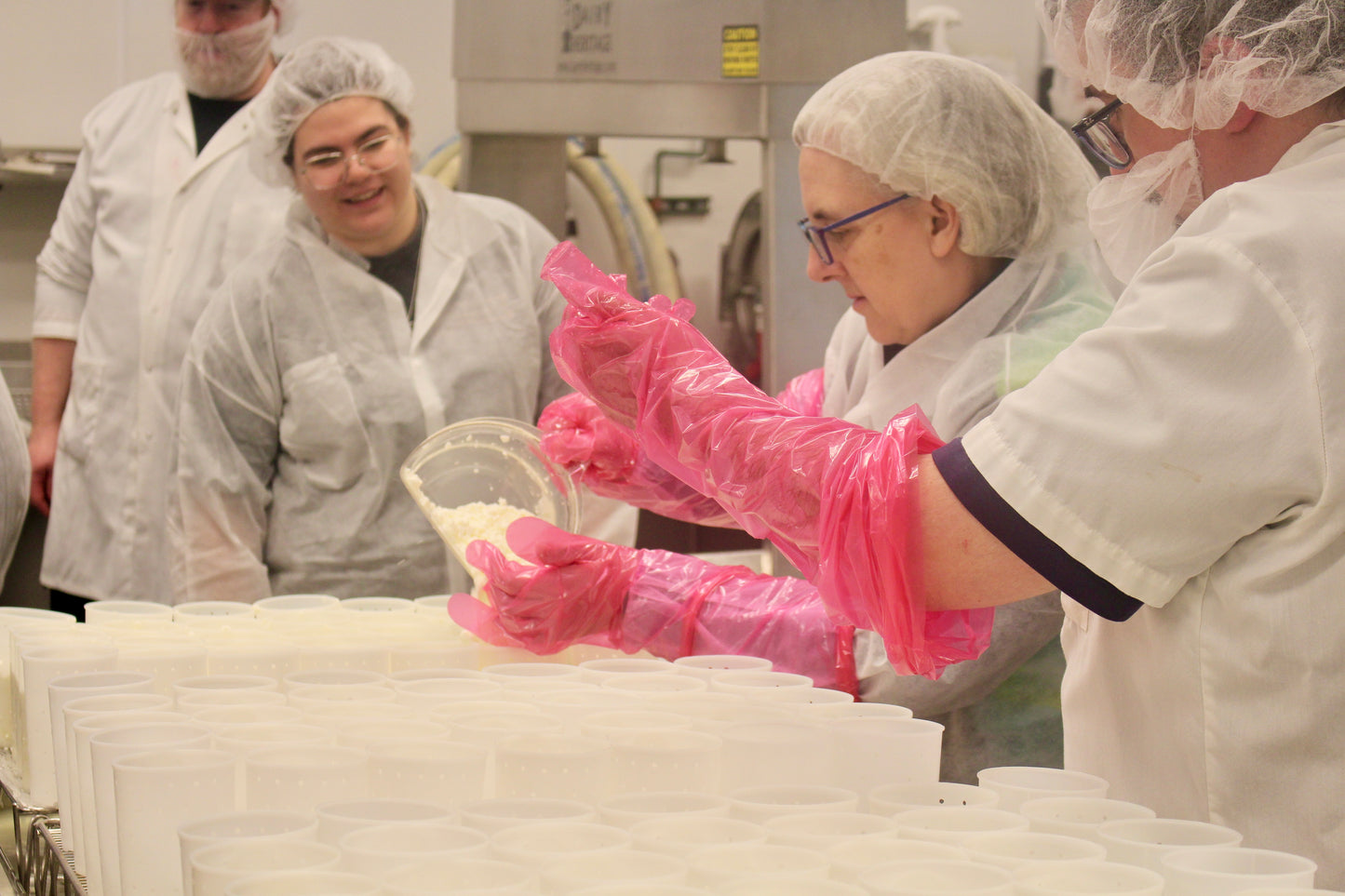
The Michigan Cheese & Dairy Guild is proud to present a hands-on, two-day Artisan Cheesemaking Short Course designed to equip aspiring and early-stage cheesemakers with the technical knowledge and practical skills to produce high-quality artisan cheeses. This immersive program combines expert-led lectures with real-time laboratory sessions, giving participants a comprehensive grounding in every stage of the cheesemaking process.
Lunches are included for both days, and you take home all of the cheeses you make, including cheese curds, cheddar, cow mini brie, fresh mozzarella, cream cheese, and goat feta.
Session 2: Summer 2026, August 7th & 8th
Location: Sanilac Creamery, 3723 Plaza Drive Suite 2, Ann Arbor MI 48108
The Short Course is led by a distinguished team of working cheesemakers with deep expertise across the artisan dairy spectrum:
- Josh Hall: Cheesemaker & Co-Owner, Leelanau Cheese Company
- Gary Smith: Cheesemaker & Co-Owner, Leelanau Cheese Company
- Jerry Alcenius: Cheesemaker, Sanilac Creamery
- Zach Berg: Cheesemonger & Educator, Monger’s Provisions
Together, this team brings expertise in farmstead and artisan cheesemaking, affinage, cheese retail, and dairy
business development — offering participants a uniquely well-rounded educational experience.
Course Schedule — Day One
Focus: Milk Science, Fermentation, Coagulation & Cultures
8:00 AM Registration, Facility Tour & Cheddar Inoculation
8:30 AM Lecture — Milk Composition & Microbiology Primer
10:30 AM Lab — Cheddar: Cut, Heal & Cook
11:00 AM Lecture — Fermentation: Acidity, pH & Lactic Acid Function
12:00 PM Lab — Cheddar Continue; Feta & Brie Inoculation
12:30 PM Lunch
1:00 PM Lecture — Coagulation: Rennet Types, Enzymes & Primary/Secondary Curd Formation
2:00 PM Lab — Hoop All Cheeses; Set Lactic Varieties
3:00 PM Lecture — Cultures: LAB, Molds, Yeasts, Bacteriophage & Culture Selection
4:00 PM Adjourn
Day One Lecture Topics in Depth:
Milk Composition & Microbiology
• Fat, protein, sugar, and mineral content; somatic cell counts and microbial indicators
• Milk selection by species, breed, farm management, and seasonal variation
• Temperature management, transportation, receiving, and yield implications
Fermentation
• Acidity and pH control throughout the make process
• Homo- vs. heterofermentative lactic acid bacteria
• Function and effect of lactic acid; direct-acidified cheese overview
Enzymes, Rennet & Coagulation
• Endogenous milk enzymes and their role in flavor development (proteolysis, lipolysis, glycolysis)
• Rennet types: veal, microbial, recombinant, and vegetable
• Primary and secondary coagulation; function in finished cheese texture and flavor
Cultures
• Primary functions of starter cultures; microbes 101
• LAB strains, eye formers, molds, and yeasts
• Culture selection strategies; flavor function; bacteriophage risks and management
Course Schedule — Day Two
Focus: Affinage, Business of Cheesemaking & Hands-On Production
8:00 AM Lab — Lactic, Feta & Brie: Finishing & Evaluation
9:00 AM Lab — Fresh Mozzarella: Stretching, Shaping & Packaging
11:00 AM Lecture — Affinage: Rind Development & Aging Methods
12:00 PM Lunch
1:00 PM Lecture — Business of Cheesemaking & Sensory Analysis
3:00 PM Lab — Packaging Finished Cheeses
4:00 PM Open Q&A with Instructors
5:00 PM Adjourn
Day Two Lecture Topics in Depth:
Affinage: Cave, Rind & Aging Methods
• Reduced oxygen packaging and vacuum sealing
• Wax and PVA coatings for shelf stability
• Natural rind, washed rind, bloomy rind, and mold-ripened aging styles
• Dry salting techniques and brine management
The Business of Cheesemaking & Sensory Analysis
• Regulatory landscape for small-scale dairy processing in Michigan
• Pricing, margins, and understanding your cost of goods
• Sales channels: farmers markets, retail, wholesale, and direct
• Sensory evaluation: identifying defects, communicating flavor, and developing a palate
Share